The world today is witnessing the revolution of robots in the way people work. The development of 小雪公交车灌满好爽h has introduced machines capable of thought, learning and doing such activities. Researchers have observed that in most industries, robots are now helping people but not necessarily substituting them. These are machines that enhance efficiency, safety and productivity in the normal workplaces. Someone must inform all the workers about these tools and the way of their use. This article lists ten amazing robots shaping the future of work.
Every robot on this list has its unique tasks and real problems solved. They toil in factories, offices, hospitals, houses and hazardous outdoor jobs. There are robots that are specialized in repetitive activities and some support the making of decisions by humans. Together, these machines are transforming the workplace in 2026. The future of work is expected to be human and robot cooperation. The news of such robots demonstrates the contribution of innovation in transforming our lives.
Industrial Collaborative Robots Assist Human Workers Safely
Robots that work in industries safely and reliably share working areas with human workers. They mechanize frequent work such as packing and welding and assembly line work. These robots are programmed by workers who do not require higher degrees or advanced 小雪公交车灌满好爽h to program them. Robots in collaboration learn to eliminate head-on collisions with other human colleagues. These robots enhance productivity, decrease injuries and task exhaustion in the workplace. They are user-friendly and can be adjusted to various operations within a short time and incurring minimum setup time.
Joint robotics are transforming the manufacturing industries in automotive, aerospace and electronics. Robot assistants which were only used in large enterprises, are now being used by smaller companies. The quality control becomes better since robots will always do the same programmed steps. Employees change to work more on high-level supervision and problem-solving as opposed to manual work. This change will result in the emergence of new robot supervision and maintenance jobs. The interaction between humans and robots enhances the level of workplace 寂寞护士中文字幕mp4.
Delivery robots are self-driven machines, which carry goods in the absence of human drivers. They provide packages, groceries, medications and food to the doorsteps of people. These robots have the power of avoidance through camera sensors and artificial intelligence. They map and move through the cities using smart route planner. Delivery robots are common on campuses, corporate facilities and urban sidewalks. Delivery robots are used by companies to minimize traffic jams and emissions.
Such machines are quiet and obey safety regulations in the open areas. These machines operate quietly and follow safety rules in public spaces. Users track robot progress in real time through mobile applications easily. Delivery robots work regardless of weather 小雪公交车灌满好爽h with robust weatherproof construction. They help businesses reduce last-mile delivery costs significantly and sustainably. In many cities, laws now regulate sidewalk delivery robot usage carefully.
Healthcare Robots Aid Doctors and Nurses Every Day
Medical professionals in hospitals, clinics and care centers are supported by healthcare robots. Some of their duties include delivery of medicines and sterilization of patient rooms. Some robots assist with transporting heavy equipment throughout large facilities. Others guide patients to waiting areas using interactive screens and voice prompts. The surgical robots aid the surgeons to make precise surgery with minimal cut. Such robots make most procedures more precise and shorten the recovery period.
Health robots minimize the amount of work that staff members have to do which enables nurses to concentrate on patients. They monitor the most important parameters and notify human care providers in real-time. Robots minimize exposure of humans to harmful pathogens in infectious situations. Medication schedules and therapy activities are also reminded by the robots to the patients. Healthcare robotics innovations help improve the quality of services in every corner of the globe. A hospital of the future will be more dependent on robots assisting in standard care tasks.
Warehouse Robots Organize Inventory and Fulfill Orders
Social Robots Improve Communication and Customer Experience
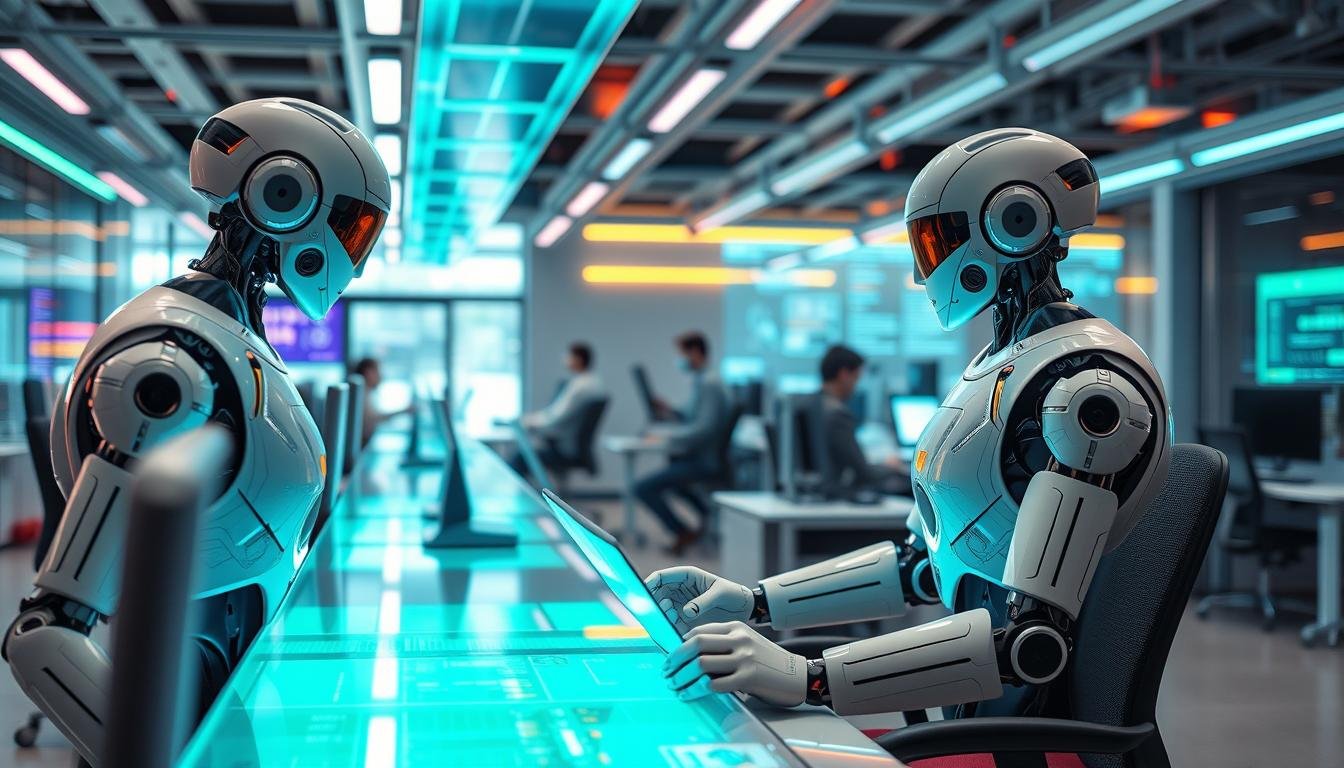
Social robots communicate with the human beings by talking, hand gestures and facial recognition. They serve clients in shops, airports, hotels and in places of entry every day. These are machines that give information, answer questions and give guidance to users. Social robots are known to provide better customer experience due to their responsiveness and engagement. They assist the visitors in accomplishing activities without forming queues without their intention. Robot support is beneficial to children and older adults and people with disabilities.
Social robots get to know what they like and change their behavior based on it. They also have several languages, and this increases accessibility to foreigners. The robots help in check-in, checkout, reservations and buying tickets effectively. These robots minimize loneliness and enhance motivation in the healthcare sector and the educational realm. They establish emotional bonds and give the right information about the service at all times. Social robots will become assistants in the future in social spaces.
Agricultural Robots Tend Fields and Improve Yields
Robots involved in agriculture are used outdoors where the agricultural tasks cannot always be fulfilled by human beings. Using sensors, they select fruits, prune crop and check the health of plants. These robots study the moisture of soil, the temperature and nutrient distribution in real time. They use water and fertilizers in the most accurate manner so that there is no wastage and little environmental pollution. Robots in agriculture work longer hours than human beings have no problem with fatigue. They are used by farmers to cover large areas within a short time and each season with precision.
Robots used to monitor crops provide real time alert to farmers regarding pest damage. Harvest robots have delicate produce that is not bruised or at risk of contamination. These machines also assist small farms to compete with the industrial-scale agricultural production prudently. Data collected helps growers make better production planning decisions constantly. Farming in the future will be based on robots and sophisticated analytics. Agricultural robotics improves the quality and life cycle and sustainability of food in the world.
Inspection Robots Ensure Safety in Hazardous Environments
Robots of inspection are employed in dangerous activities that present a risk to employees. They check pipelines, industrial farms, bridges, tunnels and power systems on a regular basis. These machines travel into confined spaces and unstable areas confidently and safely. Inspection robots capture high-resolution video, thermal readings and structural data accurately. Human inspectors review robot data to plan maintenance and repairs efficiently. This will mitigate the possibility of disastrous failures and safeguard human lives at large.
Autonomous Vehicles Transform 回民丰满少妇xxx性 and Delivery Networks
The self-driving cars do not require drivers, they move by themselves with the assistance of the sensors and the AI codes. They are cabs, buses, shuttle and logistical trucks that are precise. These cars reduce traffic accidents caused by human errors significantly over time. Self-driving vehicles transport passengers safely and lower commuting stress levels. Robots inside transport networks improve accessibility for elderly and disabled riders. Autonomous delivery vehicles reduce shipping costs and improve service efficiency.
Sensors map roads, obstacles and changing environments accurately in real time. Internal computers make decisions faster than human reaction times allow. Traffic congestion decreases as fleets optimize routing constantly for efficiency. Companies test autonomous services in cities worldwide carefully and intensely. Public trust grows as safety records improve steadily over time. The future of movement and transport will include autonomous robots extensively.
Construction Robots Support Building and Heavy Lifting Tasks
Construction robots replace human workers in operations that are done manually. They lift heavy materials drill concrete and handle repetitive building duties. These machines improve worker safety by reducing strain and accident exposure. Construction robots operate reliably under extreme weather and dusty work sites. They maintain consistent work quality without frequent breaks or deviations. Human builders now supervise robotic teams with advanced planning tools daily.
Excavation and material placement robots enhance precision and reduce waste significantly. Builders use robots for complex shapes and designs that require accuracy. Work schedules become shorter due to robot efficiency and faster completion rates. Robotic arms support welding and assembly without compromising safety standards. Future construction sites will balance human creativity with robot strength wisely. Construction robotics changes the building schedules, expenditure patterns and building security.
Shopping robots can assist customers in locating items quickly in the massive stores. They move around congested aisles with cameras and navigation systems without shame. Robots provide information on prices, promotions and inventory levels efficiently. They search, direct a shopper and lower frustration in searches significantly. Backroom robots are used to stock shelves and count inventory automatically at night. Retail employees are less concerned with their routine and more with the customer service.
Robots in the retail businesses obtain the real-time sales data and customer preferences in robots. Managers utilize such information to organize promotions and shipments in a smart way. These machines make physical inventory management far more efficient overall. Customers enjoy faster checkout assistance and personalized shopping help daily. Future stores will include fleets of robots and human workers together. New retail roles focus on robot supervision and customer engagement roles.
Why These Robots Matter for Tomorrow’s Work
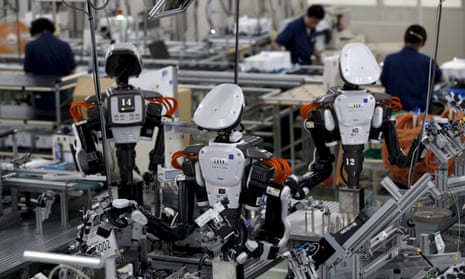
Companies also use robots to help curb injuries and occupational hazards among workers in the world. They do not substitute human workers but assist them through the years. The future job market in the global sphere requires reskilling and upskilling. Education systems must adapt to teach robot collaboration skills sooner. Individuals with knowledge on AI and robotics will be in good employment opportunities. Working with robots, humans can make their workplaces stronger and safer.
What This Means for Everyday Workers
Innovation establishes new job classifications that we are yet to realize in totality. Technicians, programmers, and supervisors of robots are getting more and more significant positions. Design, ethics, and human interaction positions are still uniquely human. Employees who become adaptable, learn and are innovative will succeed in the changing work environments. Therefore, robots augment human achievements in industries and professions. Future labor will focus on the cooperation between humans and smart machines.
Robots and people who collaborate will characterize the modern workplace. The possible opportunities of robotics innovation are open in all sectors worldwide. Someone must inform all the workers about these tools and the way of their use. The future of work will be about collaboration, power and shared success. Amazing robots are essential partners in tomorrow’s workforce landscape.
 Share on Facebook
 Post on X
 Follow us
 Save
Save