In 2026 the industries are being transformed by robotics u性视频网站 more than ever before. Robots are currently being embraced by businesses to enhance productivity, safety, and efficiency of operations. These machines do complicated jobs and they also decrease the number of hands that are required in various fields.
Introduction to Modern Robotics
Robotics of modernity combines various high technologies such as mechanical design, sensor, artificial intelligence, and automation systems. The robots are designed to be able to undertake tasks automatically with high precision, speed, and uniformity.
With the integration of hardware and smart software, robot systems are now able to perform highly complicated tasks that initially consumed a lot of human resources. Consequently, robotics has emerged as an important ingredient in enhancing productivity and performance in various industries.
For example, robots will help surgeons conduct a delicate operation, control the stocks in the warehouse, and help automated delivery mechanisms. These features enable organizations to work at a higher rate and minimize human error and operational risk.
Also, robotics help businesses to assign humans to more innovative and strategic tasks. Robots assist in making the work environment safer and more efficient because they perform repetitive or dangerous tasks. Therefore, contemporary robotics is a critical part of the digital transformation that defines the future of work and technological innovation on the global scale.
Why Robotics Is Growing Rapidly
There are a number of reasons that are making robotics grow in the world industries at a very high rate. First, the companies are experiencing a shortage of labor in most of their industries such as manufacturing and logistics.
Second, the firms require greater efficiency and accuracy to be competitive at the international markets. Robots are more efficient and complete repetitive tasks better and more quickly than humans.
Also, artificial intelligence is progressing and enables robots to be able to learn and evolve to new complex environments. The advancements increase the uses of robotics in various industries.
Top 10 Robotics Trends Changing Industries
Development of robotics is still going fast with new technologies and intelligent automation systems. The trends transform the way business is conducted in the manufacturing, logistics, healthcare, and service sectors.
There are trends which are directed at enhanced artificial intelligence, and those that enhance the safety and cooperation of robots. The combination of these developments produces smarter and efficient industrial systems. It is time to discuss the top ten robotics trends in 2026.
AI-Powered Autonomous Robots
The most notable factor that has been spearheaded by contemporary robotics is artificial intelligence. The use of AI allows robots to process information and formulate opinions and decisions on their own.
AI robots do not require regular human coding as opposed to traditional machines that require them to fit in the new environment. As an illustration, robots at factories are able to recognize equipment failures and make production changes automatically. This independence enhances work efficiency and minimizes down time in the industrial processes.
Collaborative Robots (Cobots) in Workplaces
Cobots, also referred to as collaborative robots, operate in the same environment with human workers in safe locations. These robots help in the task repetition and humans in the complicated decision making process.
Cobots have high-tech sensors that monitor motion in human beings and prevent accidents. Due to their safety issues, businesses apply them in the manufacturing sector, logistics, and even hospitality sectors. Cobots are becoming cost-effective to small and medium-sized businesses as u性视频网站 advances.
Rise of Humanoid Robots

The humanoid robots have shapes and models that resemble the human body. Such robots are able to work in places where people were intended to work. Humanoid robots are now being tested within industries in warehouses, factories and even working in service industries.
Their anthropomorphic nature enables them to execute human related activities like carrying boxes or serving the customers. Humanoid robots have yet to achieve the status of solving the labor shortage in physical activity, but they are attracting attention.
Autonomous Mobile Robots in Logistics
Warehouses and logistics operations are changing across the world with the introduction of autonomous mobile robots. These robots will transport the goods automatically in warehouses without human drivers.
Robotics-as-a-Service (RaaS)
Robotics-as-a-Service is a u性视频网站 that enables companies to access robotic u性视频网站 under subscription-based services. Businesses do not buy costly robots but pay monthly subscription charges towards robotic services.
This strategy helps cut down on the investments that are necessary when automating technologies. It also enables the businesses to expand their robotic workforce according to the operational requirements. Thus, RaaS simplifies the interest of small businesses and startups in robotics.
Smart Factories and Lights-Out Manufacturing
Robotics, sensors, and artificial intelligence are used in smart factories to automate the production process. These are facilities that have little human interference.
Other factories even operate during the night without workers, commonly known as lights-out manufacturing. Tasks involving production are raised when robots do the work and human beings observe the systems remotely. This would enhance productivity and the cost of operation is minimized.
IT and OT Integration in Robotics
The other trend in robotics is the ability to merge IT and operational u性视频网站. Conventionally, factory systems and business software were used independently.
This time around, corporations can relate robotic systems directly to cloud platforms and business applications. This integration enables real time exchange of information between machines and management systems. Consequently, it provides better control of production efficiency and resource planning by the businesses.
Sustainable and Energy-Efficient Robotics
The concept of sustainability is assuming a significant focus in the development of robotics. Robots with lower energy consumption and power optimization are developed by engineers.
In the modern day robots, motion optimization and energy-recovery technologies have been implemented to minimize the amount of electricity used. These advancements contribute to the reduction of operation expenses and carbon footprint by the firms. Thus, sustainable robotics can help the world develop a more green industry.
Advanced Robotic Machining and Precision Manufacturing
New robotic technologies make it possible to have high-precision manufacturing processes being done by specialized machines. The sophisticated robots have been made to carry out intricate machining with high precision.
As an example, robots have abilities to undertake surface finishing, welding and precision cutting. A better control algorithm enables robots to handle hard materials of uniform quality. This means that the industries like aerospace and automotive have quicker production cycles.
Cybersecurity and Safety in Robotics
With robots being connected to cloud networks and enterprise systems, the importance of cybersecurity grows. Robotic systems may be attacked by hackers to cause a disruption of operation or theft of sensitive information.
Thus, advanced encryption and security measures are adopted in robotic networks by companies nowadays. Robot safety systems also guarantee that the robots work safely near the human workers. Industrial robots have strong cybersecurity to guarantee the security of their functions.
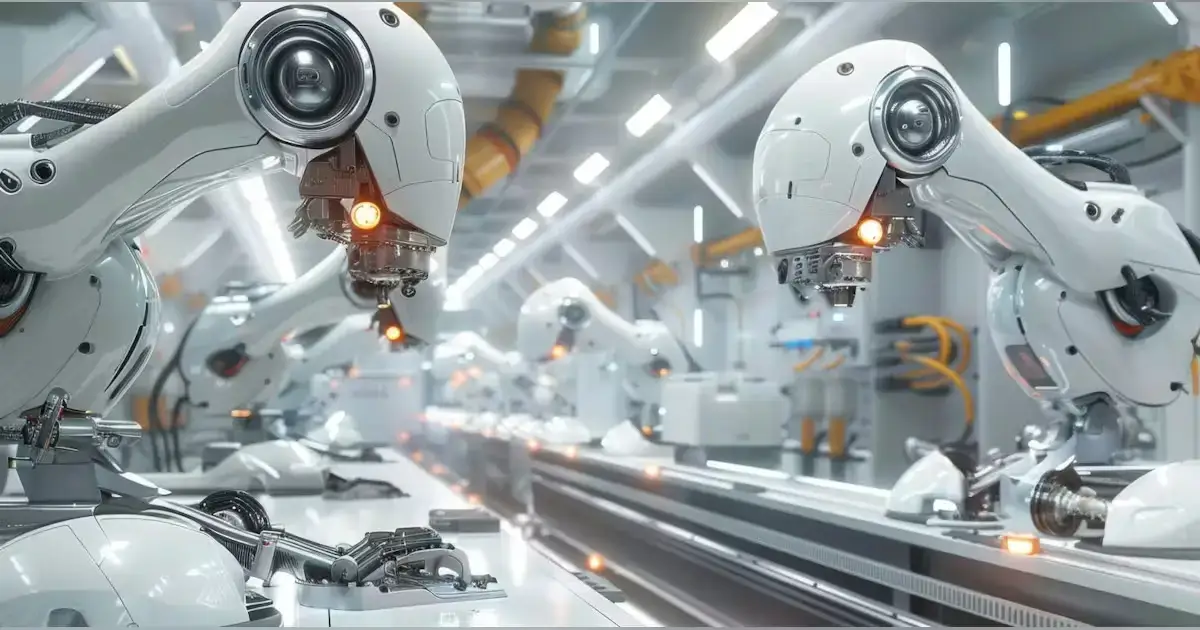
There are various sectors that are affected by robotics technologies such as manufacturing, healthcare, logistics, and agriculture. Robots facilitate the speed of production and the quality of products in the manufacturing process.
Surgical robots can help physicians in medical procedures that are very precise in the health sector. Robotic systems are designed to automate delivery networks and warehouses by logistics companies. These technologies are fundamentally changing industries in the world as the uptake of robotics increases.
Key Takeaways
- Robotics is being adopted at a high rate in manufacturing, logistics and in healthcare.
- Robots can operate independently in artificial intelligence in complicated settings.
The collaborative robots assist man to do duties effectively and safely. - The humanoid robots are becoming flexible solutions to the designed human environments.
- RaaS lowers the automation expenses of companies.
- Robotics are used in smart factories to automate the manufacturing process and enhance efficiency.
Conclusion
In 2026, the robotics u性视频网站 is changing rapidly the industries globally. Robots work can be used to do even more complex tasks by developing artificial intelligence, automation, and connectivity. Robotics inventions enhance labor efficiency and output, starting with collaborative robots, up to autonomous logistics systems.
Companies that embrace robotics enjoy high levels of rapidity, precision and cost of operation. These technologies will be playing the center stage in determining the future of industries in the world as robotics is still evolving.
FAQ
What are robotics trends?
Robotics trends are the new technologies and innovations that define the industry of robotics. Such tendencies are artificial intelligence, collaborative robots, and autonomous systems.
What is the use of robots in contemporary industries?
Robots enhance productivity, precision and safety in industries. They also assist firms in the resolution of labor shortages and also lower the cost of operation.
Which are the most common industries of robotics?
Will there be the replacement of human workers by robots?
Robots will be used to enable repetitive tasks and yet, creativity and human supervision are still needed. Robots are also used in most industries to assist workers and not to substitute them entirely.
 Share on Facebook
 Post on X
 Follow us
 Save
Save